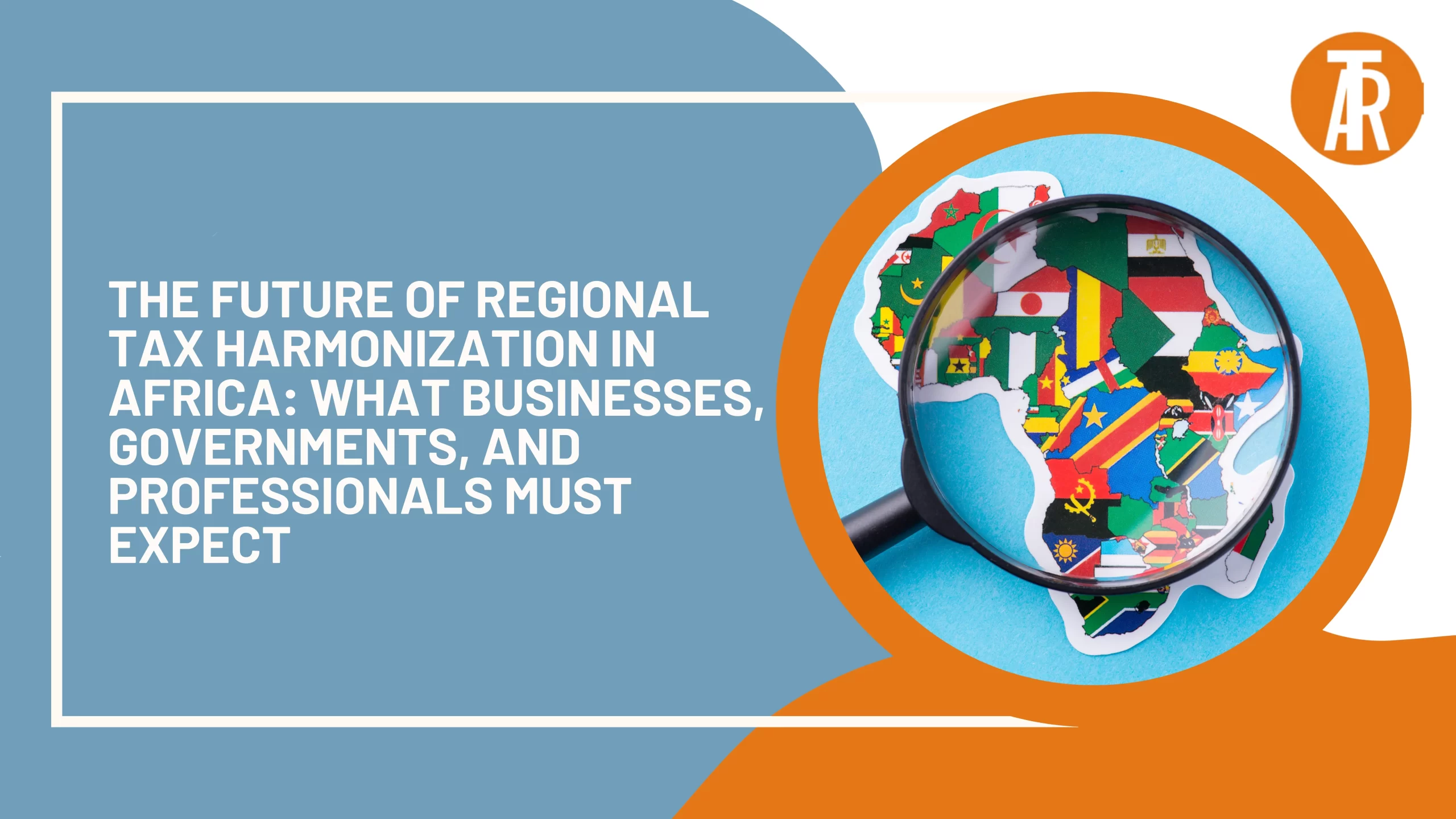
The Future of Regional Tax Harmonization in Africa. Africa is entering a new economic era. With initiatives like AfCFTA and regional blocs such as ECOWAS driving integration, one critical question is emerging:
Can Africa harmonize its tax systems to support trade, investment, and growth?
Today, tax systems across African countries remain:
- Fragmented
- Inconsistent
- Complex for cross-border businesses
The ECOWAS Double Taxation Framework (2023 Order) is one of the first serious attempts to address this.
But this is just the beginning.
What Is Tax Harmonization?
Tax harmonization refers to:
Aligning tax rules, rates, and systems across countries to reduce complexity and promote economic integration
Key Objectives
- Eliminate double taxation
- Reduce tax barriers to trade
- Promote investment
- Improve tax administration
Why Africa Needs Tax Harmonization
Without harmonization:
- Businesses face multiple tax regimes
- Cross-border trade becomes expensive
- Investment decisions are distorted
- Tax disputes increase
For Africa to compete globally, tax systems must evolve.
Current State of Tax Harmonization in Africa
1. Regional Efforts (ECOWAS as a Case Study)
ECOWAS has introduced:
- Double taxation rules
- Withholding tax limits
- Coordinated tax principles
This provides a foundation for regional integration.
2. AfCFTA (Continental Vision)
AfCFTA aims to:
- Create a single African market
- Remove trade barriers
- Promote free movement of goods and services
Tax harmonization is essential for its success.
3. National Tax Reforms
Countries like Nigeria are:
- Updating tax laws
- Introducing digital tax rules
- Strengthening compliance frameworks
This shows alignment toward global standards.
Key Trends Shaping the Future
1. Shift Toward Source-Based Taxation
African countries are increasingly:
Claiming tax rights where economic activity occurs
Implication
- More taxation in market jurisdictions
- Reduced profit shifting
2. Rise of Digital Taxation
The digital economy is forcing governments to:
- Tax businesses without physical presence
- Introduce Significant Economic Presence (SEP) rules
This will reshape tax systems across Africa.
3. Increased Cooperation Between Tax Authorities
Future systems will include:
- Exchange of information
- Joint audits
- Shared enforcement mechanisms
Transparency will become the norm.
4. Alignment with Global Standards (OECD BEPS)
African countries are adopting:
- Anti-avoidance rules
- Transfer pricing standards
- Global minimum tax principles
This ensures consistency with global tax systems.
5. Simplification for MSMEs
Future reforms will focus on:
- Simplified tax regimes
- Reduced compliance burden
- Digital tax platforms
MSMEs will benefit significantly.
6. Integration of Customs and Tax Systems
Trade and tax systems will become:
- Digitally integrated
- More efficient
- Less bureaucratic
This will reduce cost of doing business.
READ ALSO: Associated Enterprises Rule Under ECOWAS: The Anti-Abuse Mechanism Every Business Must Understand
Challenges to Tax Harmonization in Africa
1. Sovereignty Concerns
- Countries want control over tax policy
2. Different Economic Structures
- Oil economies vs service economies
3. Administrative Capacity
- Varying levels of tax system maturity
4. Political Will
- Implementation depends on leadership
These challenges must be addressed.
Opportunities Created by Harmonization
For Businesses
- Easier expansion across Africa
- Reduced tax uncertainty
- Lower compliance costs
- Increased profitability
For Governments
- Improved revenue collection
- Reduced tax evasion
- Stronger economic integration
For Tax Professionals
- Increased demand for advisory services
- Cross-border expertise opportunities
- Policy and research roles
What Nigerian Businesses Should Expect
In the coming years:
- More coordinated tax rules across ECOWAS
- Increased scrutiny of cross-border transactions
- Expansion of digital tax rules
- Greater enforcement
Businesses must prepare early.
Strategic Recommendations for Businesses
1. Build Tax-Aware Expansion Strategies
- Align business and tax planning
2. Invest in Compliance Systems
- Digital tools and documentation
3. Monitor Regulatory Changes
- Stay updated on reforms
4. Engage Tax Professionals
- Proactive advisory approach
The Role of Thought Leaders and Platforms Like Yours
Platforms like Africataxreview and Taxmobile.Online are critical in:
- Educating businesses
- Bridging knowledge gaps
- Supporting policy awareness
- Driving tax literacy across Africa
Final Insight: Africa Is Moving Toward One Tax Reality
The future of taxation in Africa is clear:
From fragmented systems → to coordinated frameworks
From complexity → to structured simplicity
From isolation → to integration
Conclusion: The Future Is Regional—and Strategic
Tax harmonization is not optional—it is:
- Necessary for economic growth
- Essential for AfCFTA success
- Critical for business expansion
The Real Question
Will your business adapt to Africa’s new tax landscape—or struggle within it?
Call to Action
If your business operates or plans to expand across Africa:
- You need to understand emerging tax systems
- You need to prepare for harmonization
- You need strategic guidance
Stay Ahead with Africataxreview
Follow for:
- African tax insights
- Policy analysis
- Cross-border strategies