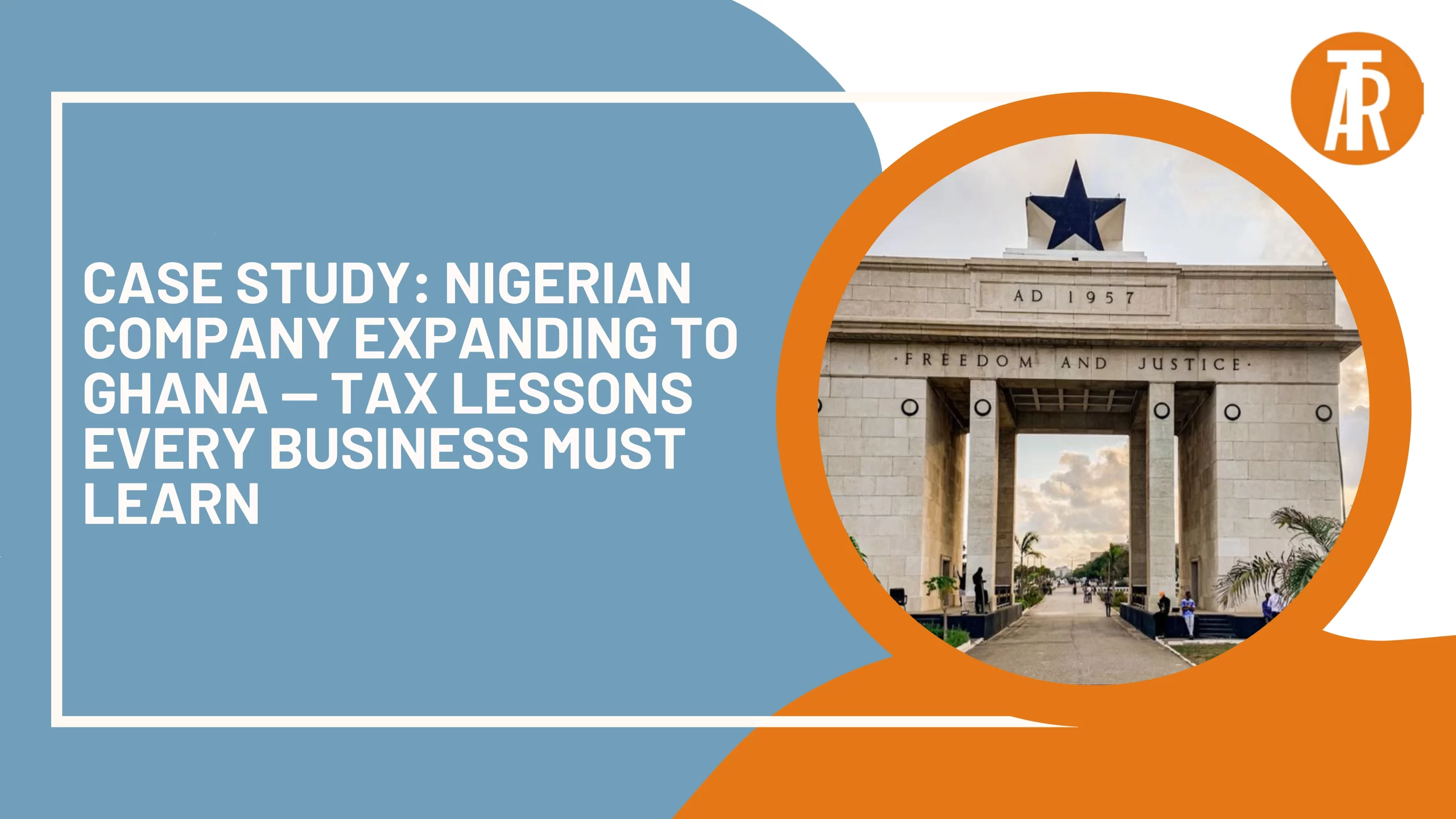
Case Study: Nigerian Company Expanding to Ghana. When a Nigerian company decides to expand into Ghana, the focus is usually on:
- Market size
- Revenue potential
- Customer demand
But one critical factor is often overlooked:
Tax structure.
This case study walks you through a realistic expansion scenario, highlighting:
- Key tax issues
- Common mistakes
- Strategic solutions
Using the ECOWAS Double Taxation Framework (2023 Order), we show how a business can expand profitably and compliantly.
The Scenario: Meet ABC Tech Nigeria Ltd
ABC Tech Nigeria Ltd is:
- A fast-growing technology company
- Based in Lagos
- Providing SaaS and IT consulting services
Expansion Plan
ABC Tech decides to expand into Ghana to:
- Serve West African clients
- Increase revenue
- Build regional presence
Phase 1: Entry Without Structure (The Common Approach)
Initially, ABC Tech:
- Starts serving Ghanaian clients remotely
- Has no office in Ghana
- Receives payments directly in Nigeria
Tax Position
- No Permanent Establishment (PE) in Ghana
- Business profits taxed only in Nigeria
Hidden Issue
- Ghanaian clients deduct withholding tax (WHT) on payments
ABC Tech receives less than expected
Key Lesson #1
Even without physical presence, withholding tax can apply
Phase 2: Growth and Market Presence
As demand increases, ABC Tech:
- Hires a representative in Ghana
- Engages local partners
- Frequently travels to Ghana
Tax Risk Emerges
Ghana tax authority may argue:
- ABC Tech has a Dependent Agent PE
Implication
- Ghana can tax profits attributable to Ghana operations
Key Lesson #2
You can create a Permanent Establishment without opening an office
Phase 3: Establishing a Local Entity
ABC Tech eventually:
- Sets up a Ghanaian subsidiary
Tax Position
- Ghana taxes profits of the subsidiary
- Nigeria taxes global income but provides tax credit
Benefits
✔ Local credibility
✔ Easier operations
✔ Regulatory compliance
Key Lesson #3
Structure determines tax efficiency, not just business activity
Major Tax Issues Identified
1. Withholding Tax Leakage
- WHT deducted on service payments
- Reduced cash flow
Solution
- Apply ECOWAS treaty rate
- Claim tax credit in Nigeria
2. Permanent Establishment Risk
- Activities created unintended PE
Solution
- Clearly define roles of representatives
- Avoid dependent agent structures
3. Transfer Pricing Exposure
- Transactions between Nigeria and Ghana entities
Solution
- Apply arm’s length pricing
- Maintain documentation
4. Double Taxation Risk
- Same income taxed in both countries
Solution
- Use tax credit mechanism
- Maintain proper records
5. VAT Considerations
- Services consumed in Ghana
Solution
- Understand Ghana VAT rules
- Ensure compliance
Strategic Structure (Optimized Approach)
After restructuring, ABC Tech adopts:
1. Clear Business Model
- Nigerian entity handles regional strategy
- Ghana entity handles local operations
2. Proper Pricing Framework
- Intercompany transactions at arm’s length
3. Efficient Profit Allocation
- Profits aligned with economic activity
4. Tax Credit Utilization
- Foreign taxes credited in Nigeria
Result: Reduced tax burden and improved compliance
Financial Impact (Before vs After)
| Area | Before | After |
| Withholding Tax | High | Reduced |
| Double Taxation | Present | Eliminated |
| Compliance Risk | High | Managed |
| Profit Retention | Lower | Higher |
Common Mistakes Highlighted in This Case
- Expanding without tax planning
- Ignoring PE risk
- Accepting WHT deductions blindly
- Lack of documentation
- Poor structuring
Key Takeaways for Nigerian Businesses
1. Start Lean—but Plan Ahead
- Avoid unnecessary PE early
2. Monitor Your Activities
- Expansion can trigger tax exposure
3. Structure Matters
- Choose the right entry model
4. Use ECOWAS Benefits
- Apply treaty provisions
5. Get Professional Advice Early
- Avoid costly mistakes
Implications for Startups and MSMEs
- Expansion is possible without heavy tax burden
- But only with proper planning
Opportunities for Tax Professionals
This scenario highlights demand for:
- Cross-border advisory
- Tax structuring
- Compliance support
- Transfer pricing
Final Insight: Expansion Is Not Just About Revenue
The key truth is:
Revenue growth without tax planning can reduce actual profit
Conclusion: Expand Smart, Not Just Fast
The ECOWAS framework allows Nigerian businesses to expand across West Africa—but success depends on:
- Understanding tax rules
- Structuring operations properly
- Managing risks proactively
The Real Question
Are you expanding your business—or expanding your tax exposure?
Call to Action
If you are planning to expand into Ghana or any ECOWAS country:
- You may face similar risks
- You may need proper structuring
- You may be overpaying tax
Stay Ahead with Africataxreview
Follow for:
- Cross-border tax insights
- Real-life business case studies
- Practical tax strategies