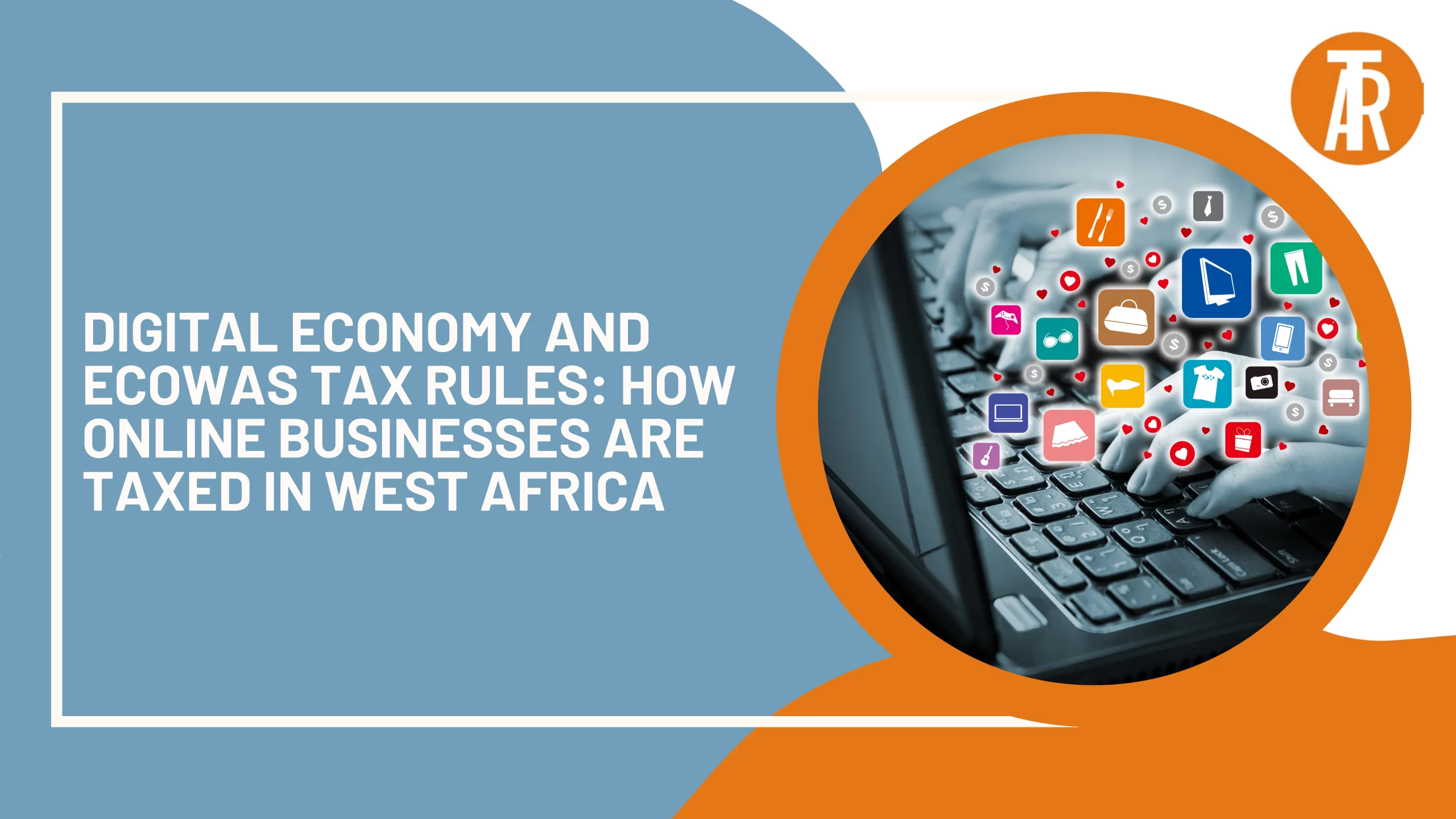
Digital Economy and ECOWAS Tax Rules. The digital economy has changed everything. Today, Nigerian businesses can:
- Sell software to clients in Ghana
- Offer consulting services to Senegal
- Run e-commerce platforms across ECOWAS
- Earn income without physical presence
But this creates a major tax challenge:
Where should digital income be taxed when there is no physical presence?
This question is at the heart of modern taxation—and the ECOWAS Double Taxation Framework is beginning to address it.
Digital Economy and ECOWAS Tax Rules(What is Tax Rule)?
The digital economy includes:
- Software and SaaS businesses
- Online consulting and freelancing
- E-commerce platforms
- Digital advertising
- Streaming and content monetization
These businesses operate without traditional physical presence.
The Traditional Rule: Permanent Establishment (PE)
Under ECOWAS:
A business is taxed in another country only if it has a Permanent Establishment (PE) there.
The Problem
Digital businesses often:
- Have no office
- Have no staff in the country
- Operate remotely
Therefore:
No PE → No tax in that country (under traditional rules)
The Emerging Reality: Digital Presence vs Physical Presence
Tax authorities are now asking:
“Should a business be taxed where it earns income—even without physical presence?”
Key Shift
From:
- Physical presence
To:
- Economic presence (digital footprint)
How ECOWAS Currently Applies to Digital Businesses
1. Business Profits Rule Still Applies
- If no PE → Taxed in Nigeria
- If PE exists → Taxed in host country
Most digital businesses currently:
- Do not create PE
- Are taxed only in their home country
2. Withholding Tax on Digital Payments
Even without PE:
- Payments for services may attract withholding tax
Example
- Nigerian consultant provides services to Ghana
- Ghana may deduct WHT
This becomes a key tax exposure.
3. VAT on Digital Services
VAT is based on:
Place of consumption
Implication
- Services consumed in another country may attract VAT there
- Digital businesses must understand VAT obligations
4. Royalty Classification Risk
Some digital payments may be treated as:
- Royalties (e.g., software licensing)
Result
- Subject to withholding tax
- Taxed at source
Misclassification can increase tax liability.
SEE ALSO: A Life in Tax: When a Desk Review Meets an Investigation
The Emerging Concept: Significant Economic Presence (SEP)
Globally, countries are introducing:
Significant Economic Presence (SEP) rules
What This Means
A business may be taxed if it:
- Generates significant revenue in a country
- Has a large user base
- Operates digitally in that market
Even without physical presence.
Is ECOWAS Moving Toward SEP?
While ECOWAS is still largely based on traditional rules:
- Member states are beginning to adopt digital tax concepts
- Nigeria already recognizes SEP for non-resident companies
This signals a future shift.
Practical Scenarios (Real-Life Application)
Scenario 1: Nigerian SaaS Company
Provides services to clients across ECOWAS:
- No physical presence
Taxed in Nigeria
Scenario 2: Online Consultant
Works remotely for Ghana clients:
- Ghana deducts WHT
Nigeria provides tax credit
Scenario 3: Software Licensing
Licenses software to Senegal:
- Payment treated as royalty
Subject to WHT
Scenario 4: E-Commerce Platform
Sells goods across ECOWAS:
- Tax depends on:
- Presence
- logistics structure
- VAT rules
Key Risks Digital Businesses Face
- Unexpected withholding tax deductions
- Misclassification of income
- VAT non-compliance
- Future digital tax exposure
- Lack of documentation
These can significantly affect profitability.
Strategic Tax Planning for Digital Businesses
1. Understand Income Classification
- Service vs royalty vs business income
2. Monitor PE and SEP Exposure
- Avoid unintended tax presence
3. Optimize Payment Structures
- Reduce withholding tax
4. Ensure VAT Compliance
- Especially for cross-border services
5. Maintain Proper Documentation
- Contracts
- invoices
- service descriptions
Opportunities for Nigerian Digital Businesses
Businesses that understand tax rules can:
- Expand across ECOWAS efficiently
- Retain more income
- Avoid tax disputes
- Build scalable digital models
Implications for MSMEs vs Large Digital Companies
MSMEs
- Must understand basic cross-border tax rules
- Avoid simple compliance mistakes
Large Digital Companies
- Must manage complex tax exposure
- Prepare for future digital tax rules
Opportunities for Tax Professionals
Digital taxation is a fast-growing area:
- Advisory for tech companies
- VAT and WHT structuring
- Cross-border compliance
- Digital tax strategy
Final Insight: The Future of Tax Is Digital
The biggest shift in taxation is this:
From physical presence to digital presence
Conclusion: Stay Ahead or Pay More Tax
The ECOWAS framework still provides opportunities for digital businesses—but the landscape is evolving quickly.
Businesses that act now can:
- Optimize tax
- Scale efficiently
- Avoid future risks
The Real Question
Is your digital business structured for today—or prepared for tomorrow’s tax rules?
Call to Action
If you operate a digital business across ECOWAS:
- You may be exposed to hidden tax risks
- You may not be optimizing your structure
- You may need expert guidance
Stay Ahead with Africataxreview
Follow for:
- Digital tax insights
- Cross-border strategies
- Real-life case studies