
Kenya’s Private Sector Pushes for Tax Stability Ahead of Finance Bill 2026. Kenya’s private sector has called for greater policy consistency and targeted tax reforms as the country prepares to debate the Finance Bill 2026 in Parliament.
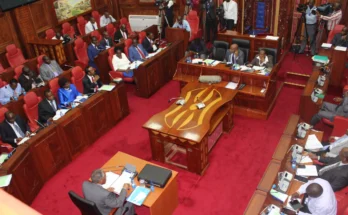
The proposals were presented during a high-level engagement between the Kenya Private Sector Alliance (KEPSA) and the National Assembly’s Departmental Committee on Finance and National Planning.
Stakeholders used the platform to highlight key fiscal concerns and recommend adjustments aimed at improving the business environment and supporting economic recovery.
Call for Policy Predictability
Business leaders emphasised that frequent tax changes and regulatory uncertainty continue to affect investor confidence and long-term planning.
According to KEPSA representatives, the Finance Bill 2026 presents a critical opportunity for the government to stabilise fiscal policy and create a more predictable tax environment.
The group reportedly noted that consistency in tax rules is essential for attracting investment, particularly in capital-intensive sectors.
Proposal to Extend Tax Loss Carry Forward
One of the key recommendations put forward by the private sector is the extension of the tax loss carry-forward period from five years to ten years.
This proposal is aimed at supporting industries that require significant upfront investment, such as manufacturing, infrastructure, and energy.
Stakeholders argued that a longer recovery period would enable businesses to stabilise operations before becoming fully taxable.
SEE ALSO: Nigeria’s Tobacco Tax Plan Under Fire as CISLAC Flags Public Health and Revenue Concerns
Push for Preferential Corporate Tax Rates
The private sector also called for the reinstatement of a 15% preferential corporate income tax rate for specific industries.
These include local motor vehicle assemblers and large-scale housing developers, both of which are seen as critical to Kenya’s industrialisation and housing agenda.
Industry players believe that restoring these incentives would encourage local production, reduce import dependence, and stimulate job creation.
Amnesty Extension to Boost Compliance
In addition, KEPSA proposed extending the tax amnesty programme by 24 months.
The extension is expected to allow more time for the resolution of disputes under Alternative Dispute Resolution (ADR) mechanisms and encourage voluntary tax compliance among businesses.
PAYE Reforms to Support Households
The private sector also recommended adjustments to Pay-As-You-Earn (PAYE) tax rates.
Specifically, stakeholders proposed reducing the top marginal tax rate from 35% to 30% and increasing personal tax relief to KSh 3,000.
According to Kennedy Mutisya of the Kenya Bankers Association (KBA), such changes could increase disposable income for workers, stimulate consumer spending, and support broader economic growth.
He reportedly noted that the reforms could inject billions into the economy, with positive spillover effects on GDP and employment levels.
VAT and Cash Flow Adjustments
Another major proposal involves revising withholding VAT remittance timelines.
The private sector is advocating for an extension to the 5th day of the following month, rather than the current requirement of remitting within five working days.
According to Jilna Shah, this adjustment would improve business cash flow and provide companies with more working capital to sustain operations.
Support for Agriculture Through VAT Relief
Stakeholders also recommended zero-rating essential agricultural inputs such as biofertilisers, soil enhancers, and foliar feeds.
Alternatively, they proposed applying a reduced VAT rate of 5% to these inputs.
According to Steve Okoth, such measures would support food security initiatives and align with continental commitments on soil health and fertiliser use.
“Triple Crisis” Facing the Economy
KEPSA described Kenya’s current economic environment as a “triple crisis” driven by fiscal pressure, energy challenges, and regulatory instability.
According to James Mwangi, these factors are collectively constraining economic performance and limiting business expansion.
He reportedly stated that the Finance Bill 2026 should go beyond revenue generation and instead focus on repositioning the economy for long-term growth and competitiveness.
Fiscal Pressure and Rising Debt Burden
Kenya’s fiscal outlook remains tight, with the national budget estimated at approximately KSh 4.7 trillion.
Debt servicing currently accounts for more than half of government revenue, significantly limiting available resources for development spending.
Additionally, pending government bills—estimated at over KSh 600 billion—have strained private sector liquidity, disrupted operations, and slowed economic activity.
Legislative Outlook
Lawmakers have acknowledged the concerns raised by the private sector as deliberations on the Finance Bill progress.
Ariko Namoit, speaking on behalf of the committee chaired by Kimani Kuria, reportedly noted the importance of balancing revenue mobilisation with economic sustainability.
What This Means for Kenya’s Tax Landscape
As Kenya moves closer to passing the Finance Bill 2026, the ongoing dialogue between government and the private sector highlights the need for a balanced approach to taxation.
While revenue mobilisation remains critical, stakeholders argue that policies must also support business growth, protect household incomes, and enhance overall economic resilience.
The final outcome of the Finance Bill will likely shape Kenya’s fiscal direction and investment climate in the coming years.