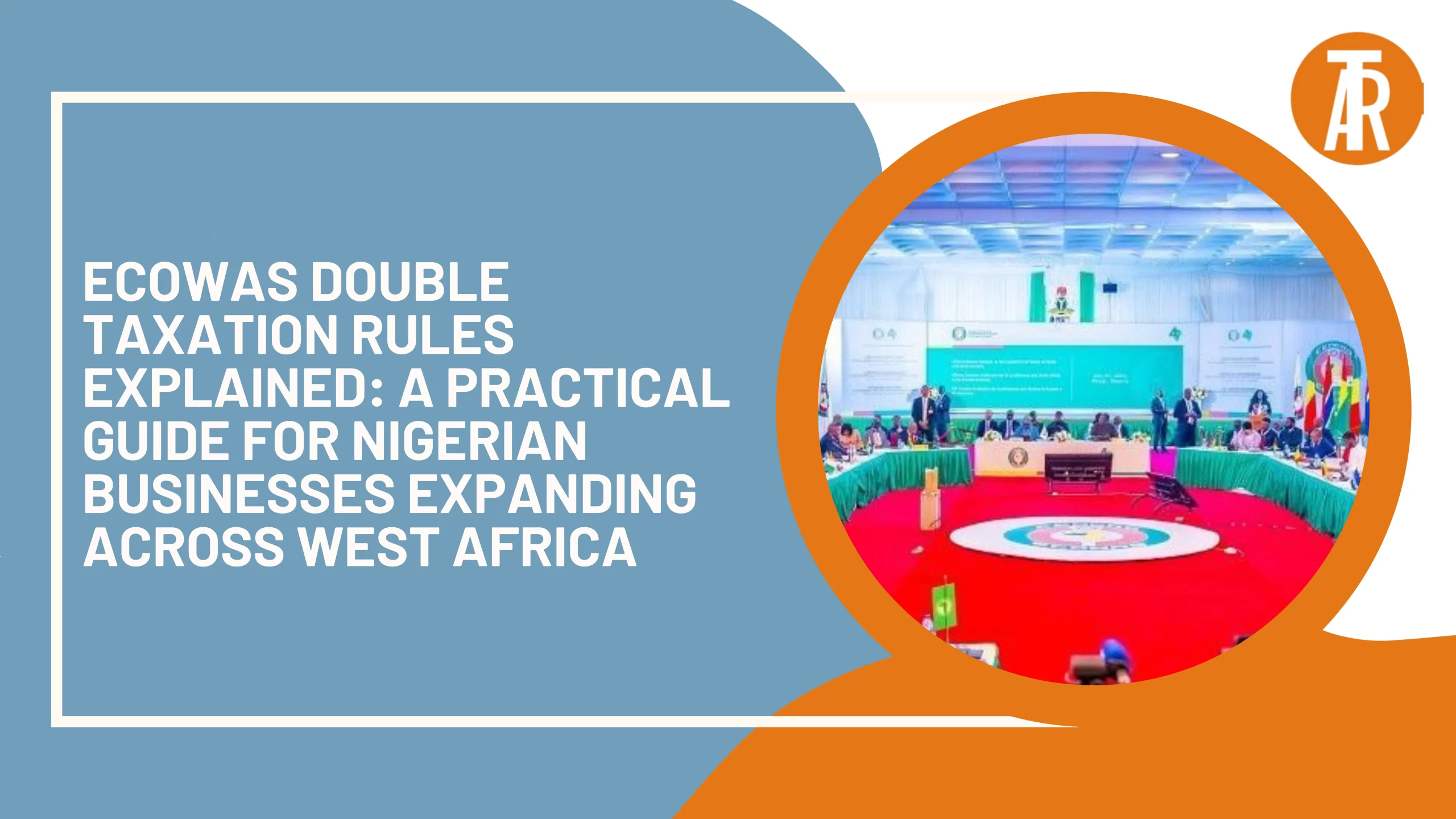
ECOWAS Double Taxation Rules Explained. Many Nigerian businesses expanding into Ghana, Senegal, Côte d’Ivoire, and other ECOWAS countries face a silent profit killer, double taxation.
Imagine earning profits in another country… only to be taxed there and again in Nigeria.
This is not just a compliance issue—it is a profitability problem.
To solve this, the Nigerian government implemented the ECOWAS Double Taxation Rules (2023 Order), creating a framework that allows businesses to operate across West Africa without being taxed twice on the same income.
In this guide, you will learn how the rules work, how to apply them, and how to use them strategically to reduce tax exposure.
ECOWAS Double Taxation Rules Explained
The ECOWAS Double Taxation Rules are a regional tax framework designed to:
- Eliminate double taxation on income and capital
- Prevent tax evasion and aggressive tax avoidance
- Promote cross-border trade and investment within West Africa
In simple terms:
They determine which country has the right to tax your income—so you don’t pay tax twice.
Why This Matters for Nigerian Businesses
If your business does any of the following:
- Exports goods or services to ECOWAS countries
- Has subsidiaries or branches in West Africa
- Provides digital or consultancy services across borders
- Receives foreign payments (dividends, interest, royalties)
Then these rules directly affect:
- Your tax liability
- Your cash flow
- Your profit margins
- Your compliance exposure
Key Taxes Covered Under the ECOWAS Framework
The rules apply to major taxes in Nigeria, including:
- Companies Income Tax (CIT)
- Personal Income Tax (PIT)
- Capital Gains Tax (CGT)
- Petroleum Profits Tax (PPT)
- Tertiary Education Tax
- NITDA Levy
This makes it one of the most comprehensive regional tax frameworks in Africa.
The Most Important Concept: Permanent Establishment (PE)
Everything in cross-border taxation revolves around one concept:
Do you have a Permanent Establishment in another country?
A Permanent Establishment (PE) is a fixed place of business such as:
- Office or branch
- Factory or workshop
- Construction project (lasting more than 6 months)
- Oil, gas, or mining operations
SEE ALSO: A Life in Tax: The Repayment That Wasn’t Just a Repayment
Why PE Matters
- No PE?
→ You are taxed only in Nigeria - PE exists?
→ The other country can tax the profits attributable to that PE
This is the single most important rule businesses must understand.
How Business Profits Are Taxed Across ECOWAS
The ECOWAS framework follows a clear principle:
Business profits are taxed in the country of residence—unless there is a Permanent Establishment elsewhere.
Practical Breakdown:
| Situation | Tax Outcome |
| Nigerian company sells remotely to Ghana | Taxed in Nigeria only |
| Nigerian company has office in Ghana | Ghana taxes local profits |
| Nigerian company operates mining site abroad | Taxed where the site exists |
Withholding Tax Benefits (Where You Save Money)
One of the biggest advantages of the ECOWAS rules is reduced withholding tax rates:
- Dividends → Maximum 10%
- Interest → Maximum 10%
Without this framework, some countries may charge higher rates.
This is a direct cash-saving opportunity for:
- Investors
- Multinational groups
- Holding companies
How Double Taxation Is Eliminated
The framework ensures you don’t pay tax twice through:
1. Tax Credit Method
Tax paid in one country is credited against tax payable in Nigeria
2. Exemption Method
Income taxed abroad may be exempt in Nigeria
This ensures fairness and prevents duplication of tax burden.
Real-Life Scenario (Simple Illustration)
Let’s say:
A Nigerian company earns ₦300 million from operations in Senegal.
Scenario 1: No Permanent Establishment
- Taxed only in Nigeria
- No Senegal tax
Scenario 2: With Permanent Establishment
- Senegal taxes profits generated locally
- Nigeria gives tax credit
Result: You pay tax once—not twice.
Common Mistakes Businesses Make (Costly Errors)
Many businesses lose money due to:
- Not identifying Permanent Establishment
- Paying excess withholding tax without claiming relief
- Ignoring treaty benefits
- Poor structuring of cross-border operations
- Lack of proper documentation
These mistakes can increase tax cost by 20%–40% unnecessarily
Strategic Advantages for Smart Businesses
Businesses that understand and apply these rules can:
- Reduce overall tax burden
- Improve cash flow
- Expand confidently across West Africa
- Avoid tax disputes with authorities
- Structure investments efficiently
Opportunities for Tax Professionals and Advisors
This framework creates massive opportunities in:
- Cross-border tax advisory
- Transfer pricing
- Tax structuring
- Dispute resolution
- International tax planning
Final Insight: This Is No Longer Optional
The ECOWAS Double Taxation Rules are not just technical provisions—they are strategic tools.
The real question for business owners is:
Are you paying more tax than necessary because you don’t understand the rules?
Conclusion: Turning Tax Knowledge into Profit
As regional trade continues to grow, businesses that understand tax frameworks like ECOWAS will have a competitive advantage.
Those who ignore it will:
- Pay more tax
- Face compliance risks
- Lose profitability